

Country snapshot
- Population 162 million
- Life expectancy 69 years (M), 70 years (F)
- There are over 57 million children in Bangladesh, that’s more than the entire population of the United Kingdom.
- HDI (Human Development Index)- 139 out of 188
- 31.5% of people live in poverty
- 43% of the population lives below on less than $1.25 per day
Why Bangladesh?
There are many challenges for children in Bangladesh:
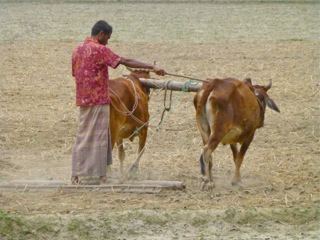
- The people of Bangladesh rely on agriculture in a region where natural disasters frequently destroy huge swathes of farmland.
- Despite recent economic growth, Bangladesh is still one of the world’s poorest countries, with just under half the population living on less than a dollar a day, equivalent to 68p. Agriculture remains the dominant sector despite attempts to build the economy on service and industry.
Did you know?
- Bangladesh has one of lowest literacy levels in the world with around 40% unable to read.
- Nearly a third of Bangladesh’s 60 million children live without a parent, so many miss out altogether on the education they are entitled to, having to work for a living instead.
- Because some education can be substandard and intermittent, most children grow up into a life of poverty.
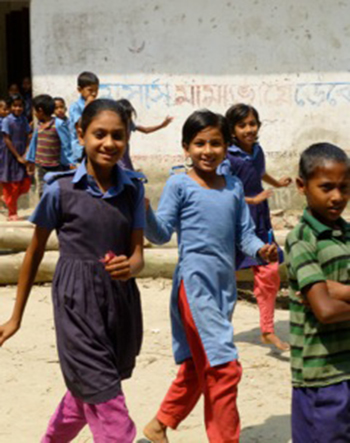
Bangladesh
Tropical monsoons, frequent floods and cyclones inflict heavy damage annually to this impoverished nation. Over a third of the population is under the age of 18 and almost seven million children between five and 14 have to work to help their families survive.
While Bangladesh has made significant progress in addressing national health and education challenges over the past three decades of its independence, the country remains one of the world’s poorest; indicators place it amongst the least developed countries.
Health & Nutrition
Chronic hunger is made worse by high rates of disease – particularly in children. Malnutrition has lifelong consequences – malnourished children are more likely to become ill more often and perform poorly in school. Women who are malnourished are more likely to give birth to small or underweight babies – repeating this dangerous cycle.
Malnutrition in childhood is also associated with developmental delays, lower economic productivity and susceptibility to chronic disease into adulthood. These limitations are compounded when populations are forced to seek their livelihoods in remote and disaster-prone areas where they are at high level of risk each year.
Stay Social